Sunday, May 8, 2022

Lesley Visser: EOTO #4

 Leslie Visser


Overview


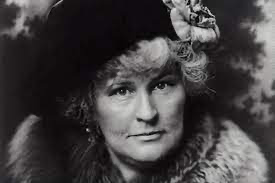
Lesley Visser is a woman of many talents. Her drive, passion, humor, kindness, and work ethic are what make her one of, if not the greatest sports reporters of all time. Her list of accomplishments is the size of a book, but the impression she left on people was even more than her accomplishments. Her impact was so tremendous that she was asked directly by the Madden family to speak at John Madden's funeral. In addition, according to John Feinstein, a New York Times Best Selling Author and a columnist for the Washington Post: "Every single woman writing sports today owes a debt to Lesley Visser, who proved that women could both out-report and out-write men long before we took that for granted, as we do now." Feinstein was right on the money with this comment considering Visser was the leader of this organization in so many ways. Her nickname is “The Woman of Firsts”. Contrary to popular belief, this did not just mean first for women, this was first for everyone. 


Accomplishments


Leslie Visser’s career took off in 1974 when she began her work with the Boston Globe. She won a grant that only 20 other women received in a 95% male-dominated field, and this kickstarted her to greatness. After this she spent time at CBS, ABC, and even had a podcast for quite some time. She was so passionate about all forms of reporting and did not have a weakness. Her career started her on the path of being a print journalist, but in the end broadcast was where she flourished the most. 

She was the first to ever be inducted into the NFL Hall of Fame after her many appearances on the sidelines of NFL games, first woman to appear on Monday night football,  and even reported on the SuperBowl. Not only was she present as a reporter at the SuperBowl, she was the first and only woman ever to present the Lombardi Trophy. 


Moving out of the NFL specifically, she was not only inducted into the NFL Hall of Fame, but 5 others while being voted the #1 Female Sportscaster of All-Time by the National Sportscasters of America. This was due to the fact of her firsts being and not limited to: “She is the only sportscaster, male or female, to have worked on the Network Broadcasts of the Final Four, the Super Bowl, the NBA Finals, the Olympics, the World Series, the Triple Crown, the World Figure Skating Championship and the US Open Tennis.” stated on her personal website. 


Conclusion


Leslie Visser is an inspiration to many, personally as a young journalist, I am incredibly inspired by her work, her dedication, and her confidence in herself. I envy the way she has made this career and life for herself and she never backed down just because of the fear of being the “first” to do it. Also admittedly, I purchased her book immediately after researching her for this specific blog post and I am thankful that I now know the work of Leslie Visser. 


Wednesday, April 27, 2022

eoto #3 response blog

Whistleblowers

What’s a Whistleblower?


Defined by the National Whistleblower Center, a whistleblower is “someone who reports waste, fraud, abuse, corruption, or dangers to public health and safety to someone who is in the position to rectify the wrongdoing.” A whistleblower is not always someone who is outside of the industry that is being caught for wrong-doing, though. Quite often, the whistleblower in a situation is someone who works for the same company as the person at fault. They are seeing within operations that something is not right and they take a stand to make sure it does not continue in their workplace. 


Examples of Whistleblowers


There are incredible amounts of cases of whistleblowers, but there are a few that are absolute standouts. One of those examples took place in 2002. Colleen Rowley, FBI Special Agent, found new details around the 9/11 tragedy. She was able to uncover information that showed FBI's D.C. Headquarters was given evidence and insight about the bombers’ real intentions that day. Actually, there was evidence given approximately 30 days before the tragedy occurred. This was plenty of time to change the course of action, but instead it was covered up. Rowley spoke in court on multiple occasions with her story and evidence to back it up, and in the end, change was made because of her. The FBI took the steps to change their protocol on the “intelligence agencies” of their group. 


Another example took place in 1996. Linda Tripp was the whistleblower in this case. She had previously worked with the government and while working would keep her phone recording each conversation she had with intern, Monica Lewinsky. In these phone conversations, it was revealed by Lewinsky that she was having relations with the president at the time, Bill Clinton. Lewinsky was a very young lady and there were many different layers of problems in this case. The evidence brought by this whistleblower led to the impeachment of president Clinton. 


Conclusion


Whistleblowers are very important for getting information that is undercover. The term, at first, comes across as if it would be a negative meaning, but the reality is there are so many cases that never would have been uncovered without them. 


Monday, April 25, 2022

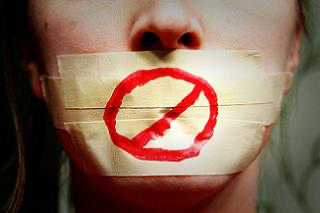
The Chilling Effect

 The “Chilling Effect”

Overview 


This “chilling effect” is a concept used to censor publishers. The direct definition of the chilling effect defined by thefire.org is “The chilling effect refers to a phenomenon where individuals or groups refrain from engaging in expression for fear of running afoul of a law or regulation. Chilling effects generally occur when a law is either too broad or too vague. Individuals steer far clear from the reaches of the law for fear of retaliation, prosecution, or punitive governmental action.” Many vague laws will use the chilling effect because people are unsure of where their speech will cross a line. This does fall under a huge misconception about the chilling effect, though. It is not used in all vague laws, just select ones to ensure that the first amendment is not being broken. This effect often leads to court cases due to the matter of people not fully understanding what they can say or how much, which we will dive into a bit deeper later in this post. 

The chilling effect began in the mid 1900’s by Shauer. Shauer believed that the “chilling” was due to imperfections in the law. The way that this plays out is that people have a fear of their words being punished, though they should not legally be punished for their words under the first amendment freedom of speech. 


Overbreadth Doctrine


When speaking on the chilling effect, it is not often spoken about without its sister term “overbreadth doctrine”. The overbreadth doctrine is when "a law, regulation, or set of rules made by the government is too vague”, or overbroad. Typically, when the overbreadth doctrine is in use it is no accident. It’s usually for indirect emphasis on a topic.

In addition, it's another way that the government can practice censorship when they are unable to do anything else while also impacting protected and unprotected speech. This meaning, the “line” to be crossed with a person's freedom of speech can be difficult to depict when the broadness is a factor. Having broadness is a loophole many people attempt to use but the government still finds their own ways to stop this from being used considering they, like the chilling effect, have no way to monitor without breaking a person's freedom of speech. 


Court Cases Using the Chilling Effect


There are several cases where the chilling effect was put into place in court. The first of many important cases is the Weiman vs. Updegraff case. This was a case where voices were fighting against teachers having their own free/ fun speech in the classroom. This was something heavily fought because the only reason some students do enjoy school is because of the personality the teachers will bring to education. Without that, students are left with boring lectures about topics they have no interest in. 

Another case was the Reno vs. ACLU case. This took place in 1996-1997 and it was ruled that “the communications decency act was an unconstitutional restriction on free speech”. This was a huge issue considering there was a danger in censoring “the most participatory form of mass speech yet developed”. 


Conclusion


Learning about the chilling effect and how it impacts the government in a not-so-beneficial way is an intriguing approach to take when learning about freedom of speech. There are not many places in the law where the government does not have full control of all situations, but this is a gray area for them which will make society wonder if this is something that should be taken advantage of more in times of need or whether this should be abolished due to the danger of certain people getting away with the things they say.


Monday, April 4, 2022

Class War Blog

 War Movie Response

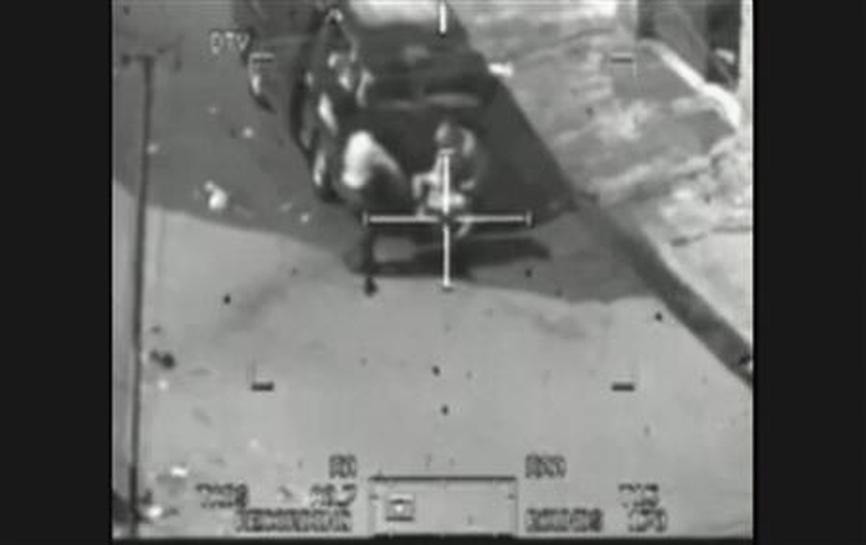
This movie was heartbreaking. I had never realized before how horrible this time was or that there were deliberate plans to kill people for entertainment. The press was so afraid to release the truth during the wars. Instead of in-depth explanations about the disturbing instances, they chose to glorify aspects of less importance and focus on things that mattered less. With this movie, the only way that people finally got the truth was through wikileaks. Wikileaks videos almost always begin with multiple content warnings. This is due to triggering content of course, but also because the internet believes that enough warnings may discourage people from engaging in the video, but more importantly from engaging in the truth. There is such a stigma around war and violence that people are attempting to shield the truth from the world when in reality, as sad as it is, the truth needs to be seen, heard, and understood. People need to know what is actually happening in these times and people need to know the despicable minds behind it all. 

“This wasn’t combat. This was reckless slaughter” stated an anonymous profile in the comment section of the video. This anonymous person was spot on, though. This was no real “war”, this was cruel, undeserved harm to innocent people of all ages. They had no idea this would be their last day of life, and seconds before it there were men laughing about it. It is disgusting, disgraceful, and scary that there are people like that in this world. It is just as scary as well that there are people helping to cover up these horrible people in the act.


Monday, March 28, 2022

Brief movie review blog

Goodnight and Good Luck 

Being a journalist during the 1940’s-1950’s was no easy task. The long hours and never-ending criticism took a major toll on each of them daily. Their opinions were constantly ridiculed, so was the truth. This film focuses at the start on Edward R Murrow being honored for his work on TV. Instead of making said honor focused on his accomplishment though, he goes a bit deeper in his speech. He speaks with a purpose about how TV should no longer just be solely for entertainment and fun. He says it needs to be educational to those watching. People should be gaining knowledge, not losing brain cells. This was a strong opening to the entire documentary as the rest of the documentary is people bringing each other down, exposing one another, and all around negativity around the profession they are all doing. 

CBS was the company they were all were all working for at the time. There were so many different controversies at this time in the media, but the main target was those in support of communism/ those who were communists. With that being said, the “bright” faces on television began to use this as a target for the people around them. At the hardest of times they would be accusatory of someone working for CBS being communist. When this occurred, that person kind of laughed it off because she had expected this immature nature, and she spoke her own truth.

The entire documentary was very fast-paced but it was deep and it was real. Back then with the amount of anger people had at each other and the world, there was so much behind the scenes that nobody knew about. This film brings this to light very well and is not only entertaining, but educational. 


Sunday, March 27, 2022

Extra Blog

Nellie Blye

Nellie Blye was a woman of dedication. She put her all into every piece she wrote and threw herself into her projects 110%. She was a woman of many talents, which eventually led to her induction into the women's hall of fame. Her work began when she wrote a response to an offensive article she had read. Her response got buzz and from there she was offered a position at Pittsburgh Dispatch. Her early work here was focused solely on working women, starting with a series all about women who were working in factories. After this, for a full six months she focused more specifically about writing on the lives of Mexican women and their work ethics/ professions. Through this work, she did lots of traveling. As a journalist, she spoke on how much she enjoyed being able to travel for her stories because it gave her range and experience when writing about each headline she was assigned. 

 This journey was no easy ride for Blye, though. At one point in her life she was sent to a mental institution. This changed her entirely. She spoke on the fact that while she was in there she felt she was sane compared to the others who surrounded her, but it also made her wonder if that is how others felt when looking at her. During her time in the institution, they were forced to share a bath towel 45 people/ 1 towel, the food was atrocious, she was held in confinement rooms that were rat-filled, damp, lonely, and intolerable, and worst of all she was beaten, dragged by her hair, held under water, and tied down. This mental institution did some serious damage on Nellie Blye. 

The mental institution scares did not stop her from her journalism work after the fact, though. She did not skip a beat coming back to this profession where she covered WW1 stories and happened to be the first one to enter the warzone to report on what was going on. This did not last as long as she had liked when she was arrested on the mistaken impression that she was a British spy. 

Blye was a woman willing to take many risks in her profession and this set a tone for not only female journalists, but males as well on how to get the best story no matter the consequence.


Monday, March 14, 2022

Winifred Sweet


Winifred Sweet

There is so much to know about Winifred Sweet. Whether the focus is upon her bravery, talent, creativity, determination, her name in general, or her impact on the world as a whole, there is no real way to focus upon just one aspect of her. She was a journalist, but she was also an author who had many book

published in her time of being a writer. 

To begin, Winifred was a female journalist back in the late 1800's and early 1900's. Her career held up for 50 years, showing just how successful she truly was. She was also known as a “Sob Sister”, which was a journalist who wrote human interest stories with sympathetic pathos. Very often she focused upon opinion writing, which had its advantages and disadvantages in the field. She passed away in 1936, but crazy enough she was working right up until her death. She had a piece published in The Examiner the week before she died. This was a clear indicator to everyone that she was the hardest worker you could find.

She spent much of her time working for the Chicago Tribune first and then her work moved to The Examiner. She was offered a position in New York as well, but this was working for her ex-husband.  She turned this offer down quickly, though it was a great opportunity, and moved to Colorado to continue her work instead.

There were not many successful women in journalism at this time. In fact, Winifred had to do some pretty crazy stunts and charades in order to be noticed or confirmed as successful. Her two craziest stunts were during the Hurricane of 1900 and her "Emergency Test". 

To start, her stunt during the Hurricane, or tidal wave, of 1900 was to dress as a young black man in order to ride upon the ship that brought her to the scene. Without this incredible disguise, she couldn’t have gotten onto the boat at all to report. Not only was she the only female reporter that was able to cover this story, she was also the very first reporter on the scene. This gave her quite a jump ahead of the others. As she approached the scene she was able to see the fires begin and in addition was first-hand experiencing the “deadliest natural disaster in American  history.” Interestingly enough though, her goal was not just to cover the full story of what was going on during this time. Her main goal overall was to raise money to relieve the damage that had been done. She also spent coverage time defending policemen and firemen claiming that they were doing their best in a situation that was so difficult to handle. She had hoped she could bring a more positive light to these people who were working so hard. 

As for her"Emergency Test", this was an even more in-depth stunt for her reporting. Within this story, she fake- fainted in front of a carriage. This drew lots of attention to her and ended with police sending her to the hospital. As this occurred, she was rudely treated by hospital workers (this was the norm for women whenever they were brought into the hospital, workers had never been kind to them). After her “drama”, she uncovered a large scandal and discovered many problems with emergency services. This stunt of hers brought a brand new respect to her name considering other reporters did not often go to these lengths to get to the bottom of a story. 

Winifred was incredibly passionate about her profession, which was what led her to do the incredible things she did. “I'd rather smell the printer's ink and hear the presses go around than go to any grand opera in the world.” She stated, explaining that her love for writing was stronger than anything else there was. This was a clear indicator of the type of person she was and the work ethic she was producing which makes it evident why she was such a phenomenon nationwide for so many years (even after her passing).  


Sunday, February 20, 2022

Development of Female Journalists in Vietnam War

Development of Female Journalists in the Vietnam War

Though women were among the journalism field before the Vietnam War and had previous experiences reporting wars, the Vietnam War was the first opportunity that they were given full access to reporting on a war. This meaning, they were never the lead reporters or left to do the top stories on their own for past wars. This changed as the Vietnam War began, but this did not come too easily. 

The women reporters were forced to create the Women’s Movement and take part in the Civil Rights Movement of 1964 in order to reach this place of equal rights in reporting for the wars. At the start of them fighting to report for the Vietnam war, women were struggling to find corporations that would hire them to do stories. To get past this stigma of women reporting on the wars, they would use their own funds to fly to new destinations and prove their worth doing interviews and reports from the destinations other journals were doing in hopes their story was better than the “professional journalist” sent to do it. After this, the next step was for women to begin pressuring the journals and war organizations to give them this freedom to write and be published the way men were, which clearly paid off in the end as they were a key component for these reports and news. Women such as Elizabeth Becker, Frances Fitzgerald, Catherine Leroy, and so many others reported on the many different aspects of the Vietnam war, but like the other female journalists, they had a few different areas of the war that they preferred to focus on. Many felt that the male reporters focused mostly on the reports of only the direct war events (the physical fights and the soldiers) as opposed to the effects that the war was having on the Vietnamese people and society as a whole. This was important to them because these were the details they felt people would want to hear about. Were they okay? How were they handling it? What short term and long term effects was the Vietnam war having on individuals and families? People had so many questions about their society that the women knew this was a story that needed to be told and it could not get overlooked any longer by the men. 

As the war continued on, the news organizations realized the talent of these female reporters and dispatched them more and more. They knew that if they were going to get the best story from off- base the women were the journalists that would get the most story- worthy news. There were many examples of stories these women were able to get fully immersed in and bring back to their organization with a bigger reaction than what could have been expected. Because of this, many women reporters received the highest honor awards at the time. This included but was not limited to the Pulitzer Prize, the Polk Award and Overseas Press Club awards. 

So though female journalists during the Vietnam War had to fight their hardest to be on top after years of neglect and doubt, that is exactly where they ended up and they continued to prove themselves as time went on. 


Link: 

https://www.proquest.com/openview/cbd8b73432bc0a1aec8894d75d4fbfe5/1

https://bmav.clubexpress.com/content.aspx?page_id=4002&club_id=23001&item_id=1473670


Friday, February 11, 2022

presenters response blog

In Response to The American Society of Magazine Editors

Listening to other groups present is always extremely beneficial to my learning. From “The American Society of Magazine Editors” group, I learned so much more than I could have expected within the short 5 minute presentation. It was engaging, educational, and well planned- out. In addition the graphics pulled me in and made me realize I wanted to do further research on my own. 

The American Society of Magazine Editors is an amazing group that was started in 1963 who gives awards and recognitions for fiction writers who have shown all around excellence in publishing their fiction writings whether published in a magazine or on a website. In addition, this is important because there is a direct tie between fiction writing and magazine journalism today thanks to ASME. 

The mission of The American Society of Magazine Editors is to stand up for and advocate for first amendment issues while being the sole networking firm for editors and additional employees in the industry. Within the company, there are interesting/ educational trainings in addition to the awards given to a limited number of writers and editors. This is said to be a very impressive part of their company and the trainings are in-depth and give a great deal of advice to upcoming writers and editors.

Another attachment of the ASME is what they call ASME Next. This is a leading organization for print and digital journalists who are just beginning their careers. This opportunity is led by senior- journalists and in addition entails awards called the ASME Next Awards for journalists under the age of 30. ASME has also sponsored The Magazine Internship program for over 50 years which is a 10- week program for incoming college seniors. This opportunity alone has brought in over 2,000 interns and from that number brought in 500 employed members. 

The American Society of Magazine Editors is overall, an organization that has done so much for the journalism community and will continue to do so in the future. It is successful and spreads its success among all of those who are fortunate enough to work with them.


https://www.asme.media

https://docs.google.com/presentation/d/1ejhBVyXJxpFz7NmytpWZbcHL2G28VnA1w9d25ZdA97E/edit#slide=id.g111b98600bb_0_53


Sunday, February 6, 2022

The Boston News-Letter

Boston News-Letter

Print journalism has come such a long way from where it used to be. Whether it was carrier pigeons or hand-working typewriters, the news world was shockingly different back in the 18-1900’s than it is now. Today, modern technology makes it possible for thousands of newspapers, magazines, and journals to share news across the entire world within minutes of an event occurring, whereas back in the day it would take weeks to hear about a story. Though this went on for quite a while there was one newsletter that was the start of a revolutionary change in the media world. This was a paper that was releasing foreign news for people to hear about within a week of the event happening, and it was the only paper to stay successful as long as it did. This was The Boston News-Letter. 

The Boston News-Letter was not the first ever newspaper, as that was called “Publick Occurrences”, but this paper was shut down immediately after the first publication by the British which was to be expected. The Boston News-Letter was the first ever successful newsletter, though, that did the work this paper showed it was capable of without getting immediately taken away by the British. It is interesting to note that this paper was originally not intended to be a newspaper at all, it was a way of communication between colonists until they came to the realization that the information that Campbell  was able to spread was something that they actually did need to have published for everyone to be up-to-date on. The first issue of the newsletter was published on April 24, 1704 byJohn Campbell who was the first editor and John Green who was the first to print (and who was eventually moved to being the editor after Campbell passed away years later). Each week it came out covering monday-monday news with a blank last page for people to leave their feedback on for the government. This paper also covered foreign news as well which was something no one else had been successful in to this point. People were able to learn about what was going on all over the world as opposed to hearing through the grapevine after weeks or even months of what may be occurring, and this was insanity to everyone. Some of the big stories the paper was able to cover in its 72 years of print included: Battles of Lexington and Concord, the Tea Party, Bunker Hill, and the most famous of all, Blackbeard the pirates head-to-head fight. This was a very impressive 72 years and after the British got this paper shut down like all of the others of its time, there was a new reign of papers that were able to build on the world that The Boston News-Letter had opened up. It was no longer a slow- paced world. Mass media was finally something of the present and something that would build bigger and bigger into the future. 


Sunday, January 23, 2022

Why Journalism?

Why Journalism?


Many misinterpret why I want to be a journalist (and chose a journalism major).
Some ask me if it is solely for the fun of writing about gossip or being the first to know the latest information on all world news, but this is not the case for me. Journalism feels like an outlet for me.

I chose this path because for as long as I can remember my greatest passion was writing. It did not matter what I was writing about, I just loved it. With that being said though, my favorite prompts in school were always the subjects about real life events. I thought it was so interesting being able to inform the world (or my classmates) of a certain topic in- depth and be able to write about it the way that I felt was the most effective for an audience. I knew from then on I wanted to be the person who wrote stories that truly impacted people. I’ve never been one to dwell on gossip of any kind, and though this is part of being a journalist depending on the stories I must report, my goal is to have a greater impact than this. Not only do I love the writing aspect of journalism, I also love the editing aspect. I grew up reading a full book every two days and then moving to the next. In elementary school all the way through high school and even first-year of college I was all of my friends’ personal editors on each and every paper, sometimes prioritizing their edits over my own because of how much fun I had editing.

So with this journalism major, I hope to make it into the journalism field where I can work my way up from writer, editor, to publisher and maybe even do them all simultaneously (though I know this is a harder task than I am leading it to be). But overall, every day all my life I have been told to do a job that I love when I get older and not to base it off of how much money I would make, and I know how strongly committed I am to this subject as a whole.

Lesley Visser: EOTO #4

  Leslie Visser Overview Lesley Visser is a woman of many talents. Her drive, passion, humor, kindness, and work ethic are what make her one...